
The doors are open.
The floor is empty.
You’re paying for the space and the team. You need more families through the door.
For family entertainment & attraction owners
We help fill your quiet days and
grow your venue’s revenue.
30 minutes to talk about your venue.

Family attractions
we help
Sound familiar?
You’re paying for the space and the team. You need more families through the door.
Interest is there. But enquiries go cold and those party slots stay empty.
A good first visit should be the start of a relationship, not the end of one.
That’s where we come in
Simple goals.
The right work behind them.
Put your venue in front of nearby families looking for their next day out.
More of the right people finding you.Make your parties easy to choose, easy to book, and easy to follow up on.
More enquiries becoming paid visits.Stay in touch with past guests through birthday reminders and reasons to visit again.
More familiar faces through your doors.Our services
The right mix of marketing for your venue. Handled by one team.
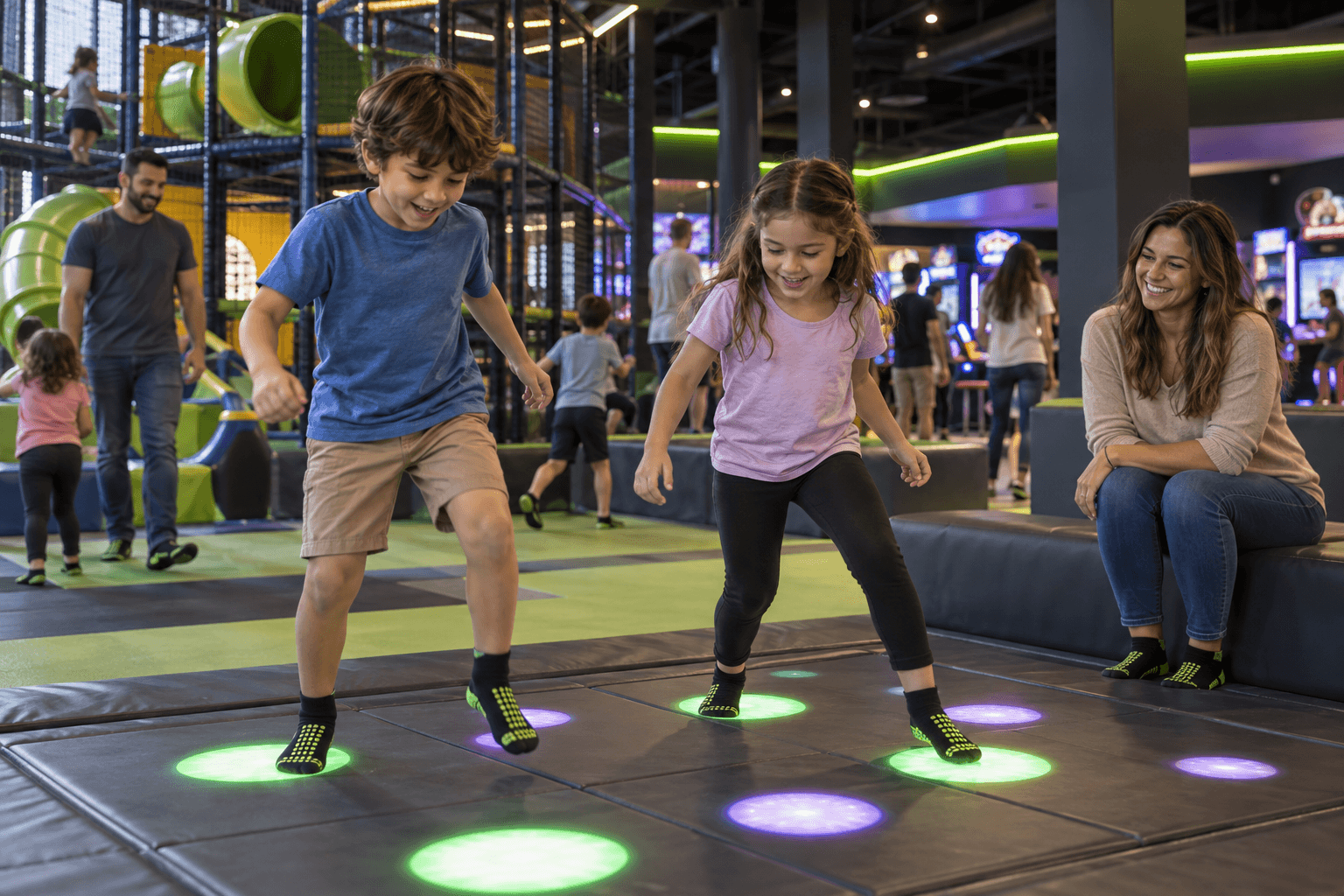
Reach nearby families on Facebook and Instagram.
Show up when people are ready to book.
Turn a glimpse of the fun into a reason to visit.
Keep your venue in their plans with fresh content.
Make your website easier to use and book from.
Bring creators to your venue to share the experience.
Help families find you through search and AI answers.
Keep families coming back with automated customer workflows, birthday flows, win-back campaigns, and SMS campaigns.
Custom packages
We tailor the services and scope to what you need.
Our process
Tell us about your venue, your goals, and what needs to change.
We look at your current marketing and find the gaps holding bookings back.
We agree the plan, connect with your team, and get everything ready.
We launch the work, track what’s happening, and keep improving.
Our CMO
With 5+ years in family entertainment center marketing, our CMO brings hands-on experience growing revenue, fixing broken systems, and building offers that give families a reason to book.
Book a call to know what could work for youYears in family entertainment
center marketing
More revenue generated for clients
than the previous year
Made the pieces of marketing work together.
Kept follow-ups moving with less manual work.
Created clearer reasons to choose a venue and book.
A little less on your plate
From the next campaign to the next guest follow-up, we help get the work done.
We work with family entertainment and attraction businesses, including indoor play, trampoline parks, arcades, and multi-attraction venues. Whether you run one location or several, the first call helps us understand your venue and where we can help.
We can work alongside your team. Together, we agree what they keep handling and where you need extra support, so everyone knows who is doing what.
Not necessarily. We start with what you already use and explain any changes we recommend before work begins.
Our packages are custom-built around your venue, goals, and budget. After the call, we outline the work, fee, and any separate advertising budget before you commit.
You will start seeing a difference in the first 90 days.
Your next month could look different
Tell us about your venue. Let’s find your next opportunity.
Book a Free Growth Call30 minutes. One conversation. A place to start.